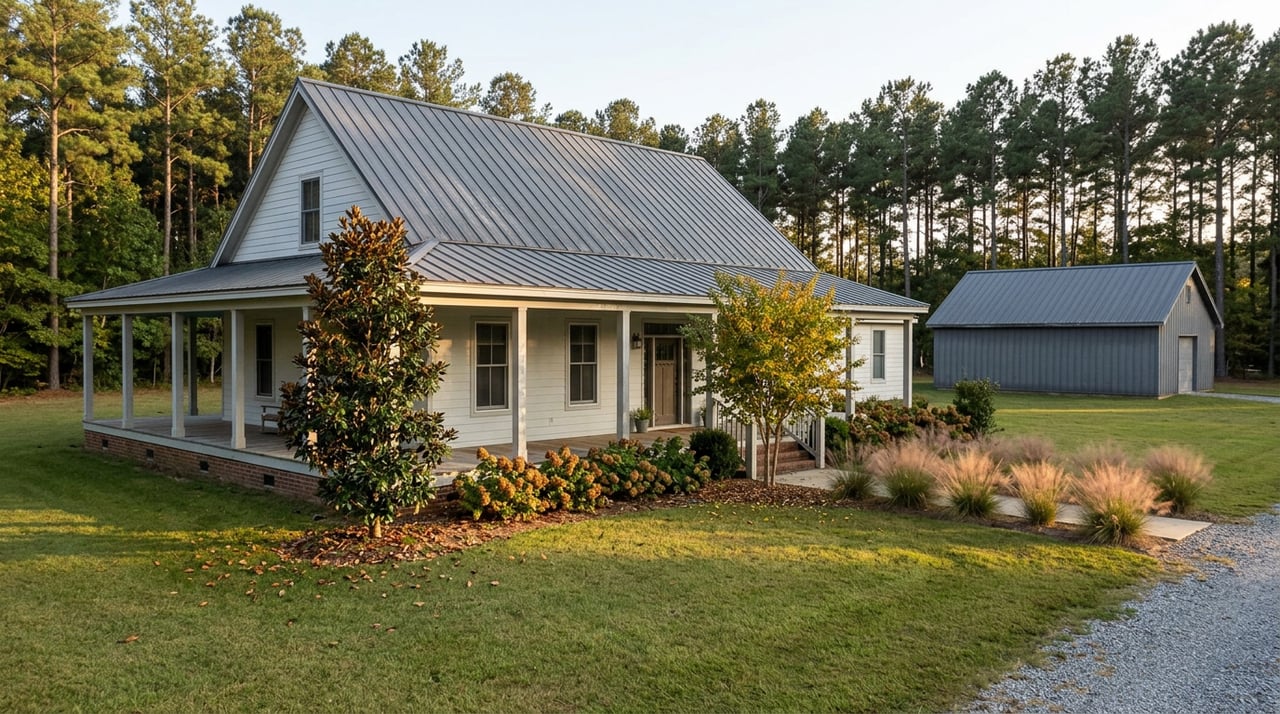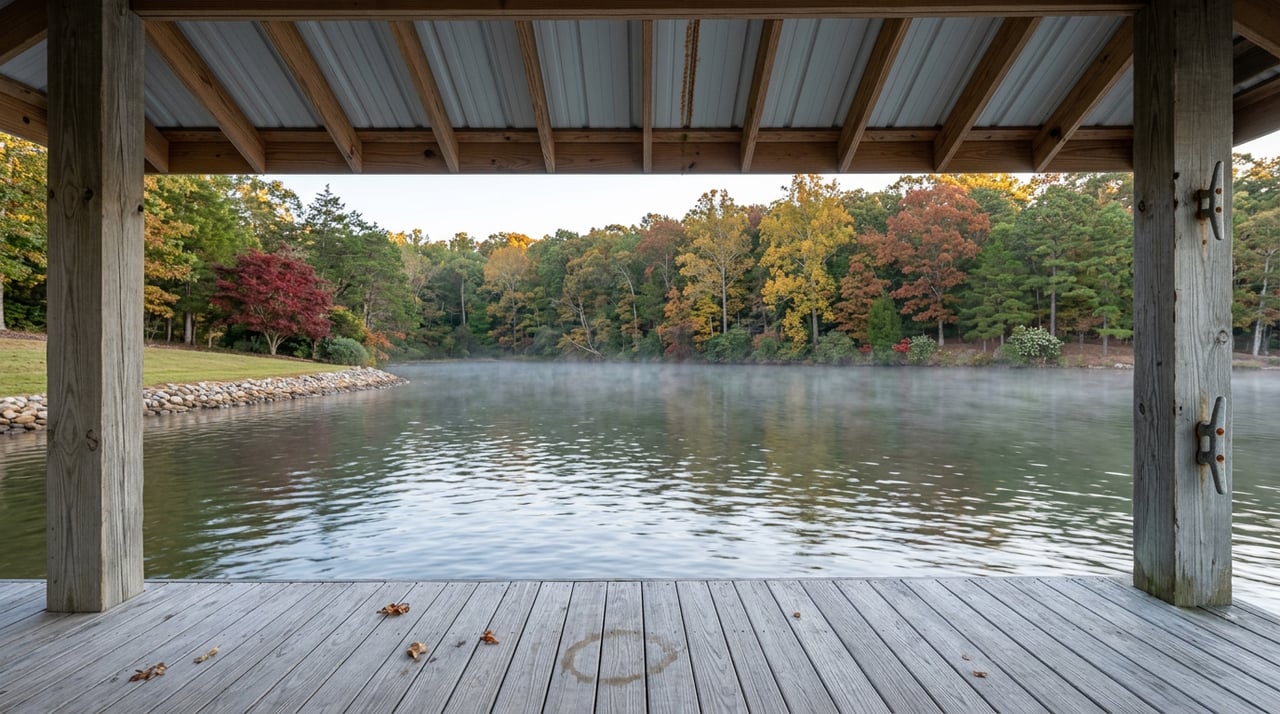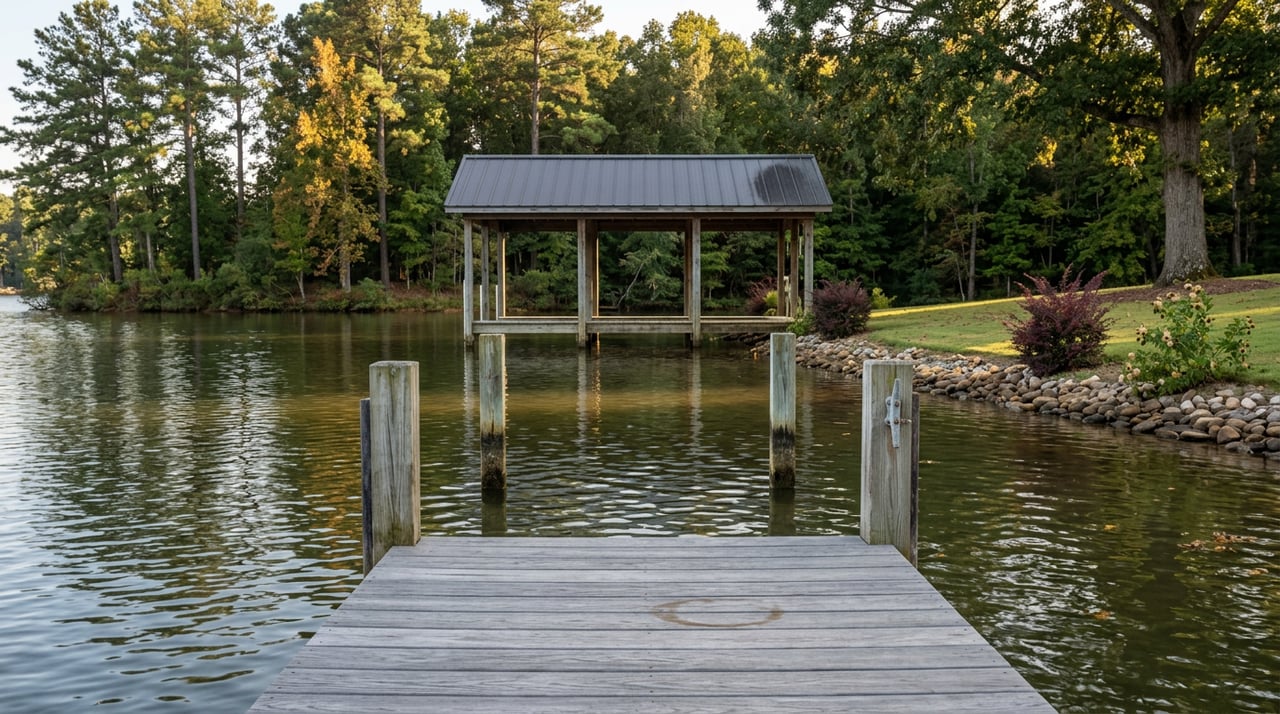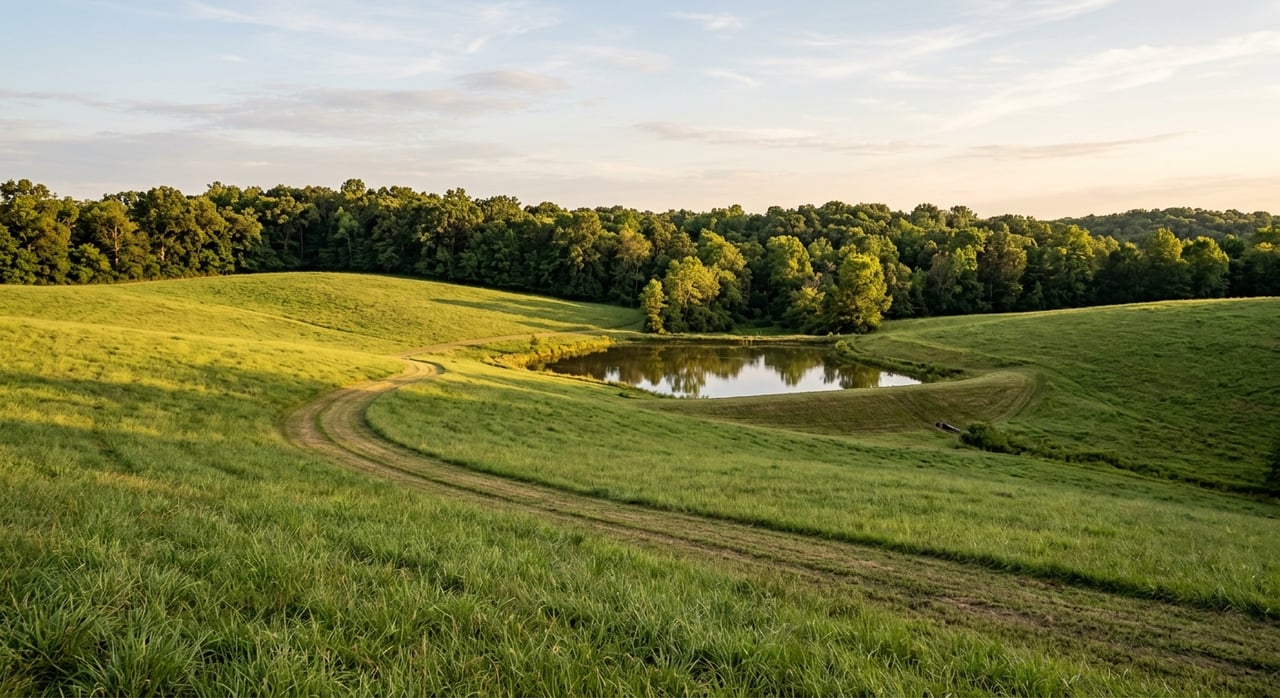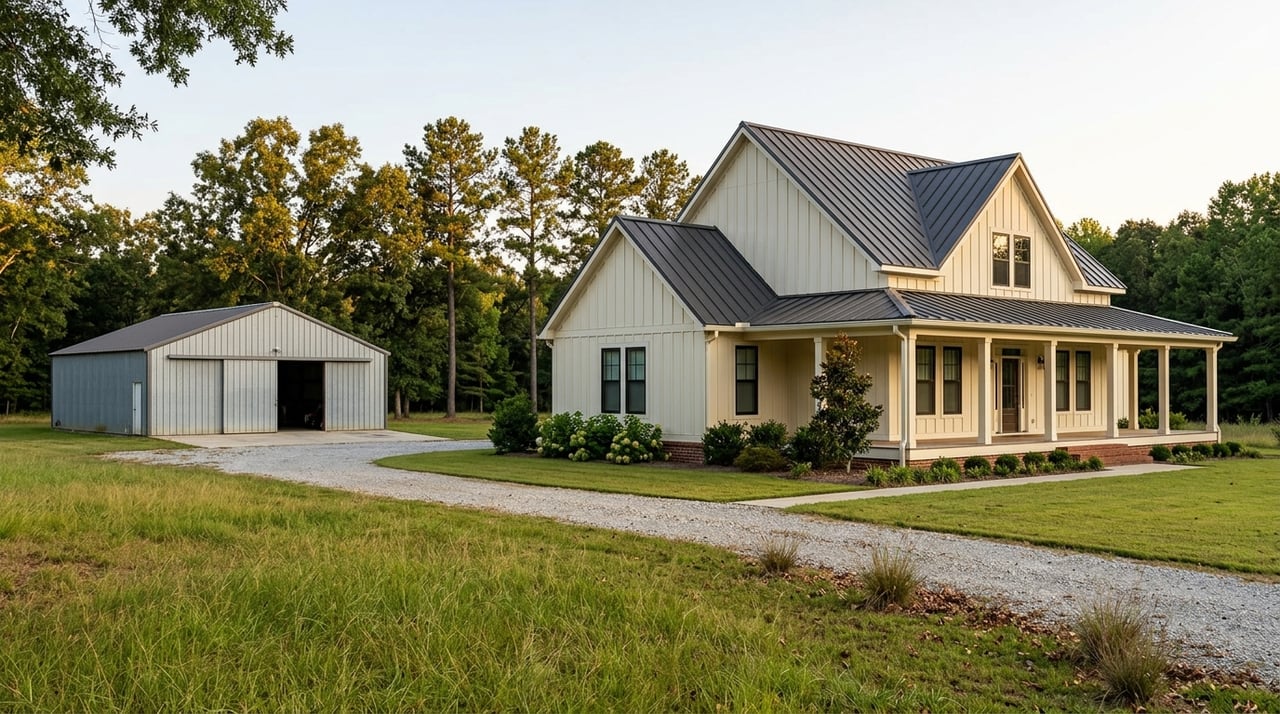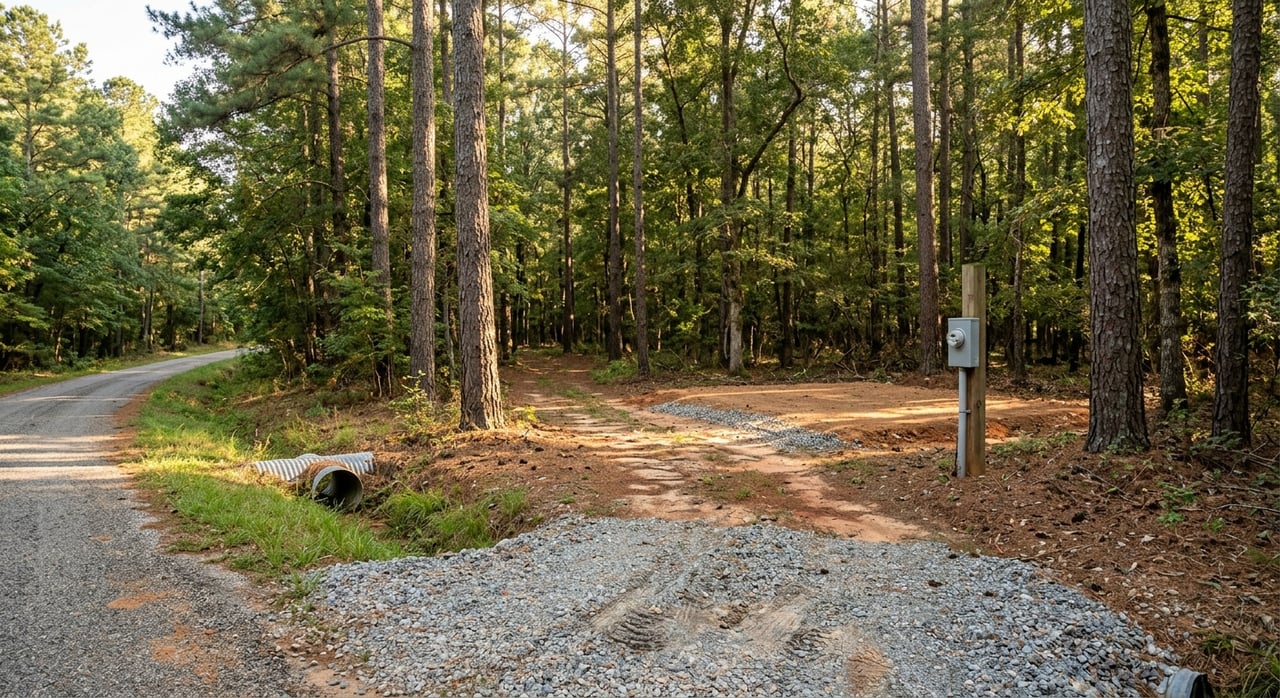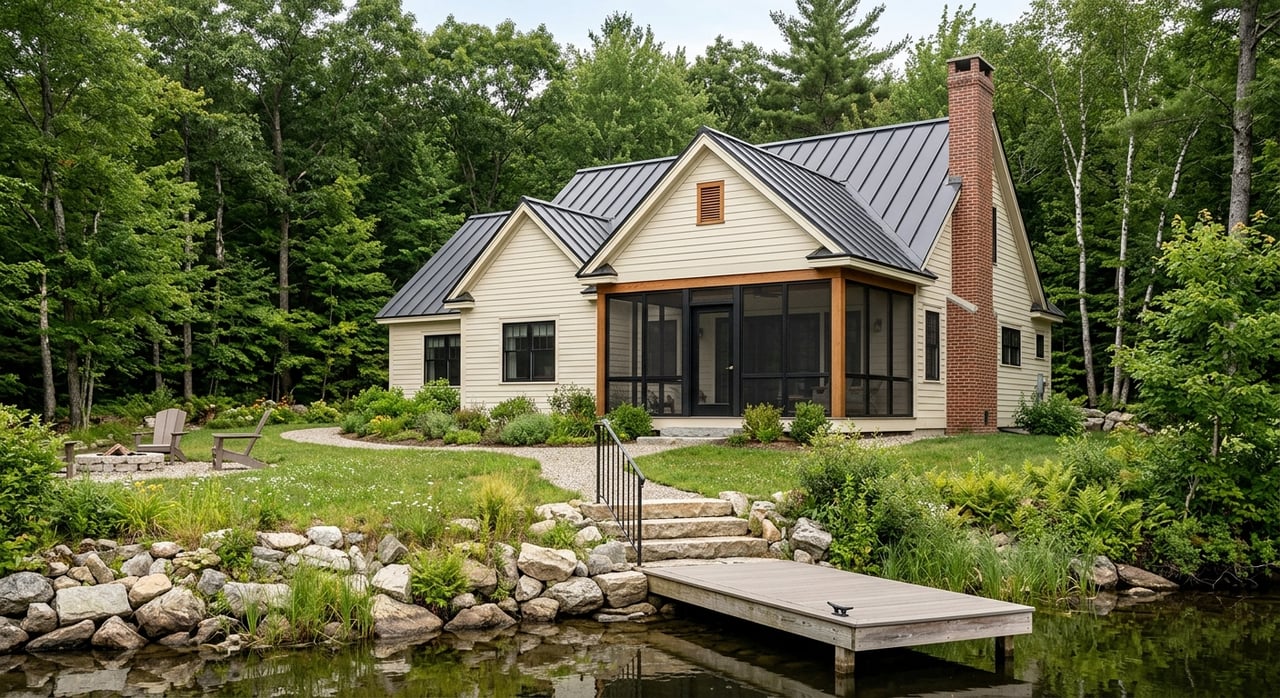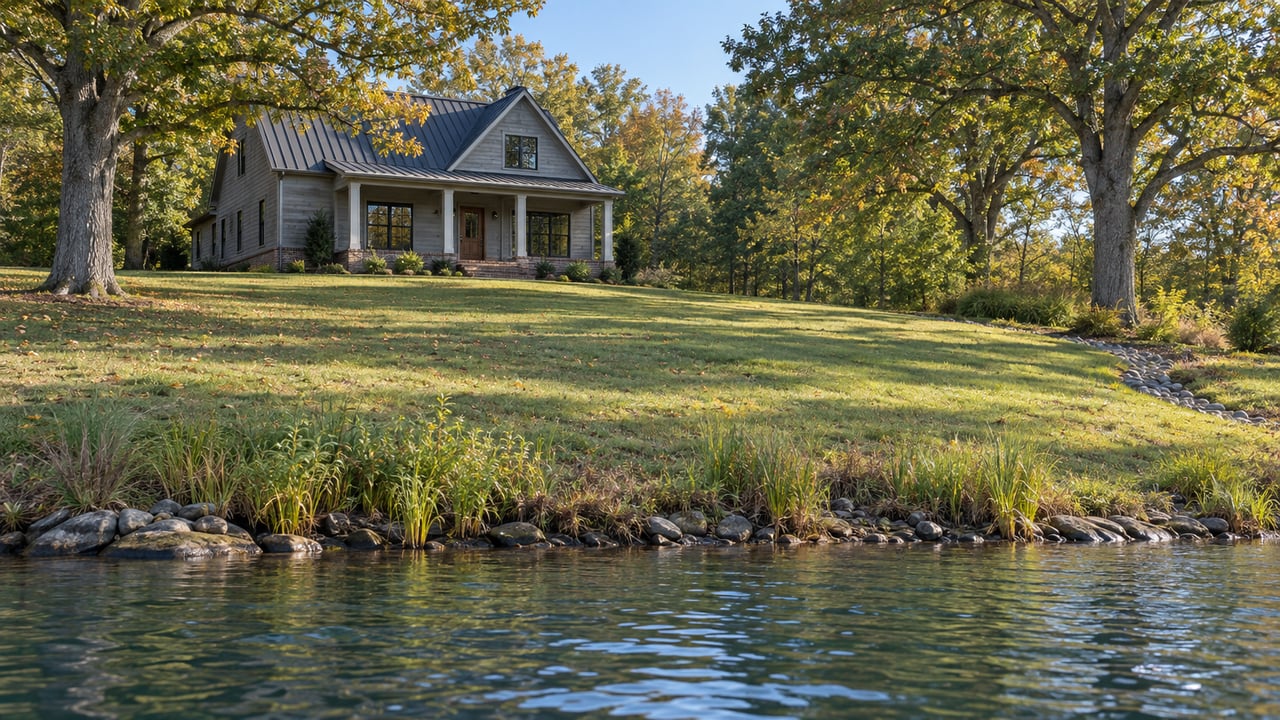
A buyer walks two lots in the same week, both listed as Smith Lake waterfront, both in the Arley area, both priced within a few thousand dollars of each other. One has a covered dock already floating on the water. The other has a cleared bank, a view that looks identical from the yard, and no dock at all. The listing agent says a dock is possible on the second lot. What the listing does not say is who actually decides that, and the answer is not the seller, not the county, and not the buyer's imagination once they close.
Alabama Power owns the pool property of Smith Lake and holds additional property rights along its shoreline under a federal license. That single fact is the reason two lots that look the same from the road can carry very different real value, and it is the fact most waterfront listings mention only in passing, if at all.
The permit lives with the utility, not the deed
Smith Lake is not a public lake managed by a state parks agency or a county recreation board. It is a hydroelectric reservoir operated by Alabama Power under a license from the Federal Energy Regulatory Commission, Project No. 2165. Full pool sits at 510 feet above mean sea level, and Alabama Power's flood easement extends further, up to 522 feet MSL. Any structure below that 522-foot line, meaning any dock, boathouse, pier, seawall, or ramp, requires a written permit from Alabama Power's Shoreline Management Program before construction begins. Verbal approval from a neighbor, a past owner, or even a real estate agent does not count.
That means owning shoreline frontage on Smith Lake does not automatically come with the right to build on it. The dock is a separate approval, layered on top of the property line, and it belongs to Alabama Power's discretion rather than the buyer's plans.
The 100-foot line that splits value
Alabama Power's own guidelines state that lots with less than 100 linear feet of shoreline may be restricted or may not be eligible for structures at all. This is not a rare edge case on the Arley side of the lake. It shows up often enough that local listings routinely flag a parcel as "restricted" or "non-restricted" right in the description, because agents know buyers will ask.
A lot with 200 or more feet of frontage in an open cove is a fundamentally different asset than a lot with 80 feet tucked between two neighbors, even if both are priced as waterfront and both show up in the same search filter. The frontage number is not a cosmetic detail. It is closer to a zoning classification, and it belongs in the same conversation as square footage and lot size before an offer gets written.
Sloughs play by a different rule entirely
Frontage length is not the only variable. Alabama Power's guidelines specifically address narrow sloughs, the tucked-in fingers of water common around Arley's coves, and state that structures in a narrow slough cannot extend more than one-third of the way across it. Some slough lots do not qualify for a dock permit at all, regardless of how much linear footage the deed shows.
This is where a buyer can be surprised even after checking the 100-foot threshold. A lot can clear that bar on paper and still fail on geometry, because the slough itself is too narrow to support a structure without blocking navigation for the property across the water. The only way to know for certain is to ask Alabama Power directly before writing an offer, not after.
What a permitted dock actually costs to build
Clearing the permit is only step one. Construction is where the real money shows up, and the range is wide enough that it changes the math on a lot that looked like a bargain.
| Dock type | Typical cost range |
|---|---|
| Simple single-slip dock, shallow water | $15,000 to $25,000 |
| Mid-range covered single or double slip with hoist | $30,000 to $50,000 |
| Custom multi-slip covered dock with entertainment deck, deep water | $60,000 to $80,000 or more |
Alabama Power's structure limits cap any permitted dock at 1,444 square feet and 92 feet in length, so the ceiling on size is fixed regardless of budget. Water depth at the shoreline is the biggest driver of cost within that ceiling. A lot with 15 to 20 feet of water at normal pool needs longer pilings and more material than a shallow-water lot, which pushes a project toward the higher end of every range above.
The drawdown window is when the work actually happens
Alabama Power lowers Smith Lake starting July 1 and finishes lowering by November 30 each year. That drawdown exposes more of the lakebed and is the window most shoreline contractors and Alabama Power itself point to as the practical time to build or repair a dock, since crews can work on dry ground instead of over open water.
For a buyer closing in late summer or fall, that timing can work in their favor if the permit is already in hand. For a buyer closing in winter or spring with a permit still pending, it can mean a full season of waiting before any dock work can start, which matters if the property was priced with lake access as part of the appeal.
What this changes about writing the offer
None of this shows up on a standard property disclosure, and a permit does not transfer to a new owner automatically just because the sale closes. Alabama Power licenses are generally transferable, but the new owner typically has to submit transfer paperwork and pay a fee, and an older dock may need updates to meet current standards before that transfer goes through.
Before an offer goes in on any Arley-side waterfront lot, it is worth confirming a short list of facts directly with Alabama Power's Shoreline Management office, which is based in Curry on Highway 257 between Arley and Jasper:
- Whether the lot's linear shoreline footage clears the 100-foot threshold, and if not, what restriction applies
- Whether the lot sits in open water or a narrow slough, and if a slough, whether the one-third rule leaves room for the dock size wanted
- Whether an existing dock has a valid, transferable permit on file, not just a structure visible from the water
- Whether any existing structure would need modification to meet current guidelines before a permit transfer is approved
- What Alabama Power estimates for review timing on that specific parcel, since approval can take weeks to months depending on the request
This is a five-minute phone call that can save a buyer from closing on a lot that will never carry the dock they pictured, or from budgeting for a covered slip that a narrow slough will never approve.
A few questions that come up often
Does the flood easement affect where I can build a house, not just a dock? The easement itself covers structures like piers, seawalls, and ramps below the 522-foot line. Home construction is generally governed by county building rules rather than Alabama Power's shoreline guidelines, but any grading, retaining wall, or septic work near the shoreline can still fall inside the permit area, so it is worth checking before finalizing a building site on a lakefront lot.
If a lot has no dock at all right now, does that mean I can't ever get one? Not necessarily. It means the permit has not been requested or approved yet, and the outcome depends on the same frontage and slough factors above. A lot with no dock and 250 feet of open-water frontage is a very different bet than a lot with no dock and 70 feet in a tight cove.
Can I just build a smaller, simpler structure to avoid the permit process? No. Alabama Power's guidelines note that except for painting and pressure washing, nearly all work in the lakebed, flood easement, or control strip requires a permit, regardless of size. A modest swim platform still goes through the same process as a covered boathouse.
Waterfront on Smith Lake is real, and the lake's reputation for clear, deep water holds up on the Arley side as much as anywhere else on its shoreline. What changes the value of any given lot is not the view. It is whether that specific stretch of bank, under Alabama Power's specific rules, will ever let an owner put a dock on it. That is a question worth answering before the offer, not after the closing.
If you are comparing waterfront lots on the Arley side of Smith Lake and want help sorting which ones actually clear Alabama Power's permitting bar before you make an offer, Sherry Pruitt Real Estate can walk the specifics with you.