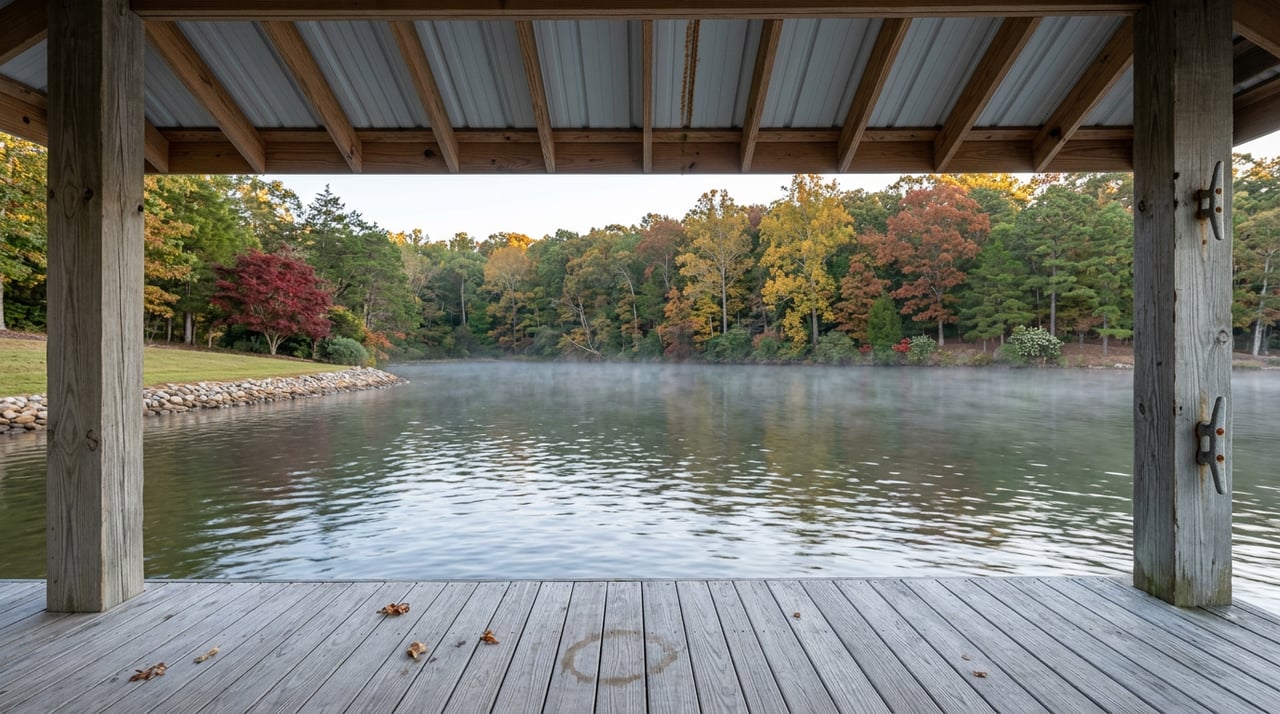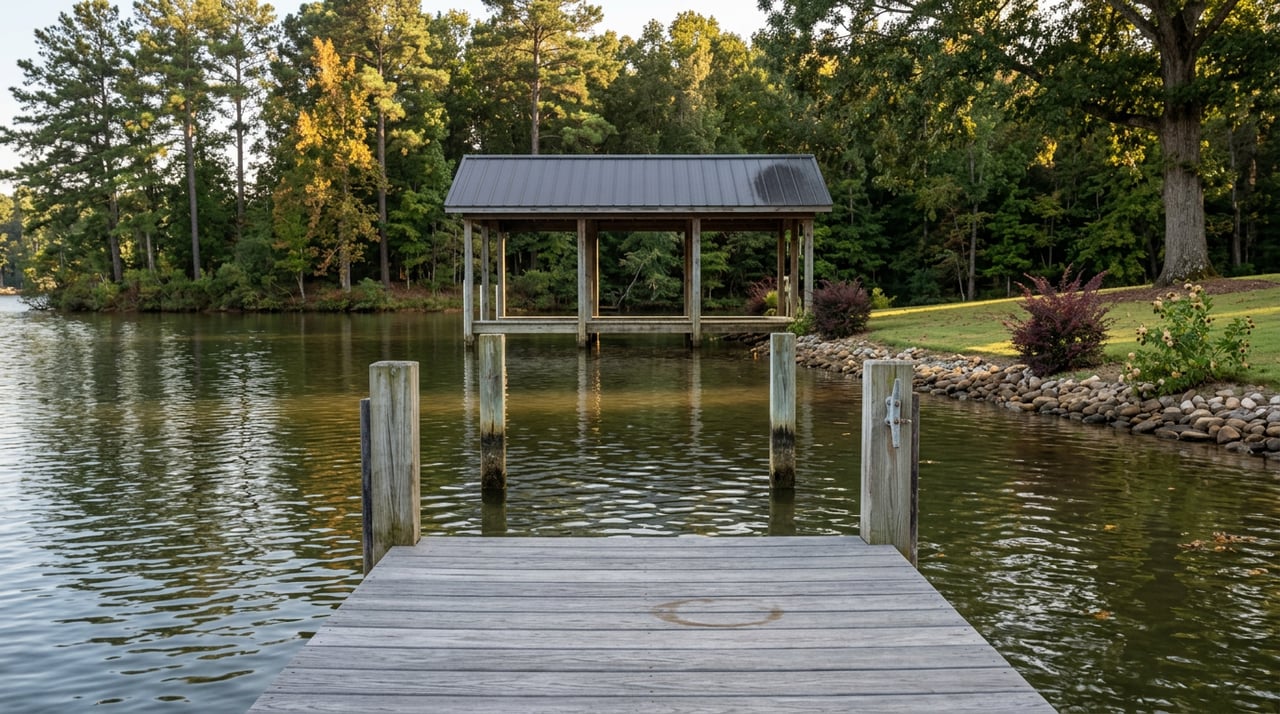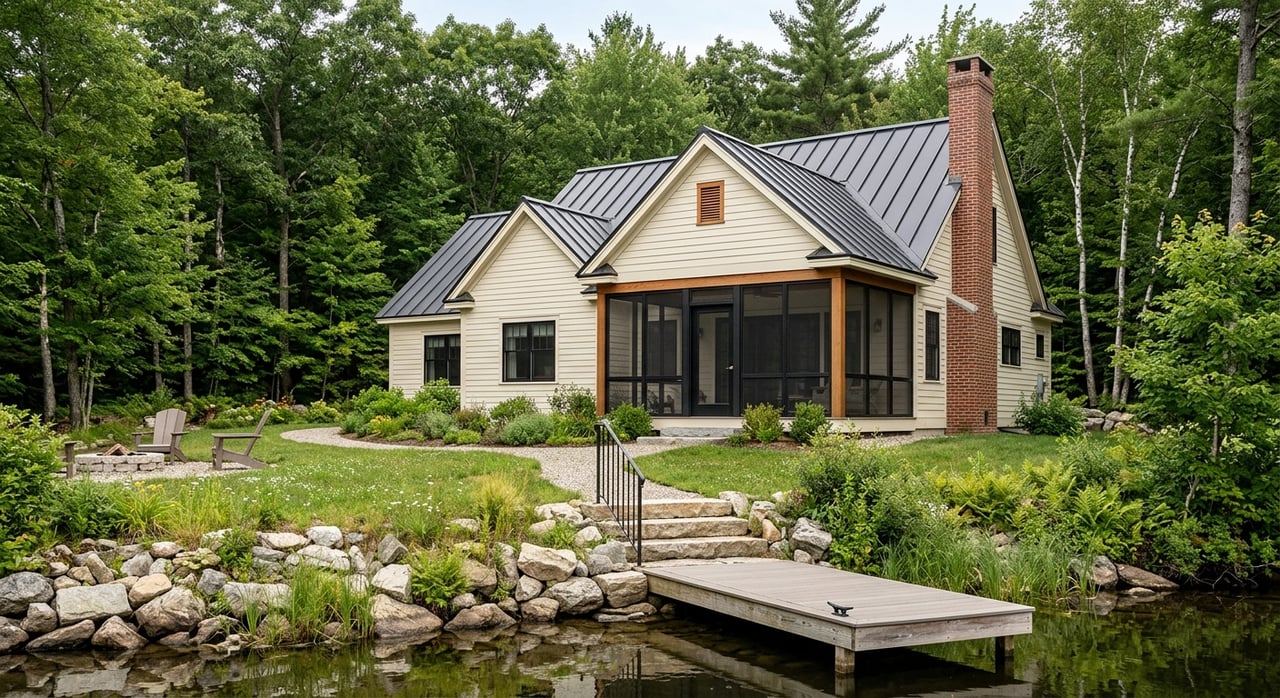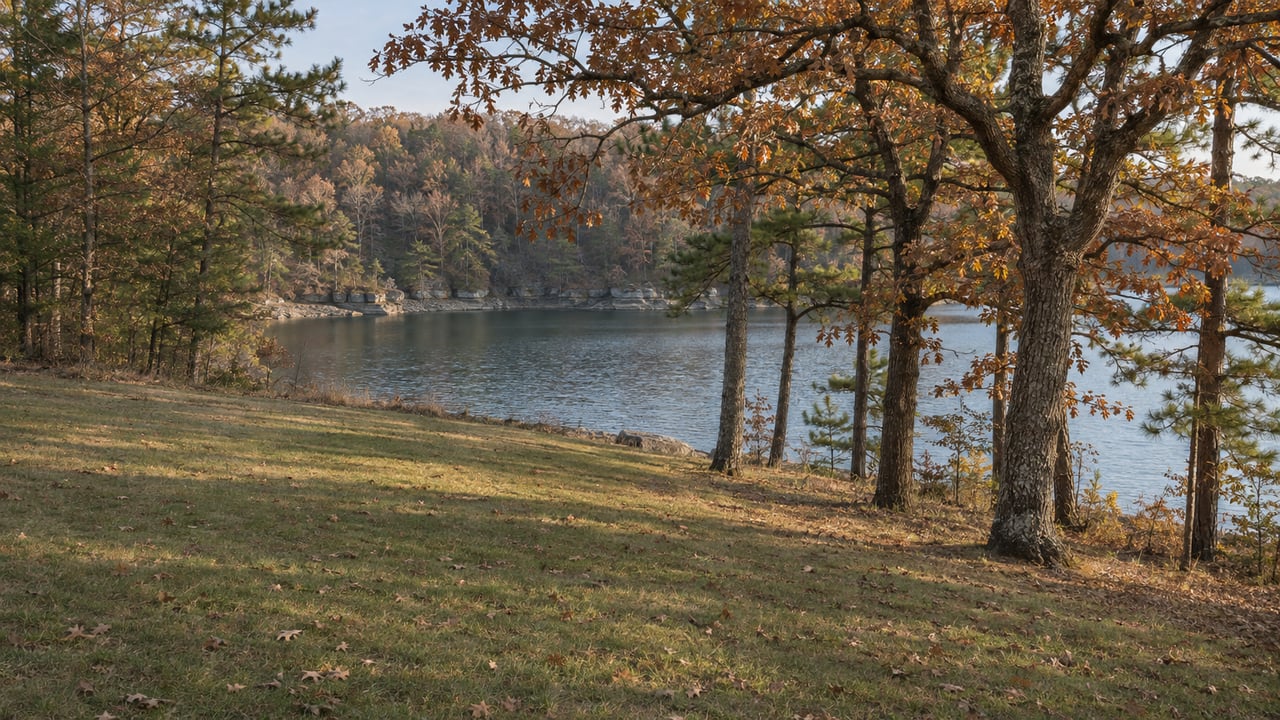
When someone shops for a Smith Lake lot around Crane Hill, they usually look at the water first. They ask about depth at the dock, which way the cove faces, and how long the walk down is. Each lot also comes with an answer to a less scenic question: where the wastewater goes. In 2026 a development on the same lake in Bremen gave a different answer from the one used elsewhere around Smith Lake, and the reaction to it shows that this answer belongs to the lot itself.
The permit comes before the shovel
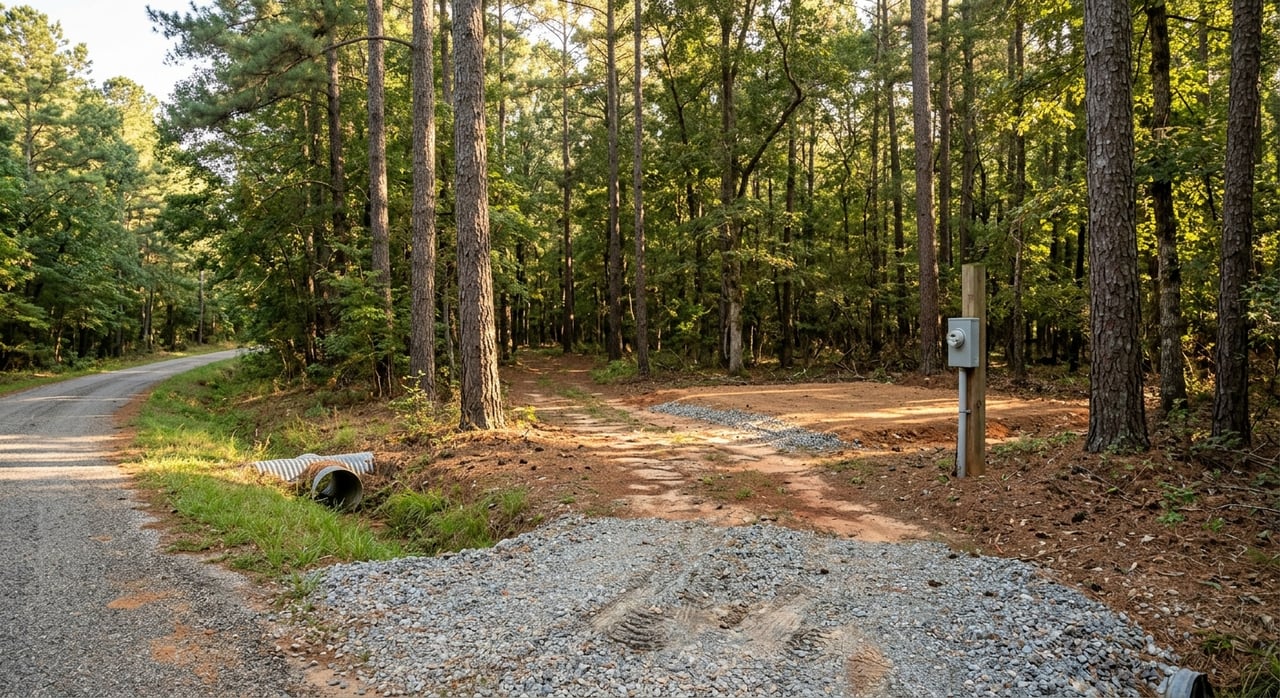
On a lot without public sewer, the Alabama Department of Public Health says soil testing decides whether a septic system will work there at all. That testing is done by a professional engineer, land surveyor, geologist or soil classifier. Some county health departments can also do the testing or may already have records of earlier tests. For a typical single-family lot, the application goes to the county health department on ADPH Form CEP-2. It needs a scaled plot plan showing the water source, the proposed system, where the soil tests were done, the setback features, and two field locations: one for the primary drain field and one for a replacement.
ADPH's Can I Live On This Lot? page says construction can begin only after the Permit to Install is issued. Rule 420-3-1-.13 gives the department or ADPH 28 calendar days to act or to explain why it hasn't, and an issued permit is good for five years. In Cullman County, small-flow onsite systems are handled by the Cullman County Health Department's Environmental Services office.
Setbacks matter a great deal on a lake lot. The state's Table 4 setbacks require a drain field to sit at least 50 feet from surface water or an intermittent stream, and the tank at least 25 feet. A drain field must also be 100 feet from wells and potable springs. Much of the shoreline is steep, and Smith Lake NOW's lot-building guide points out that on a narrow lot the septic field, the house and the driveway compete for the same flat ground.
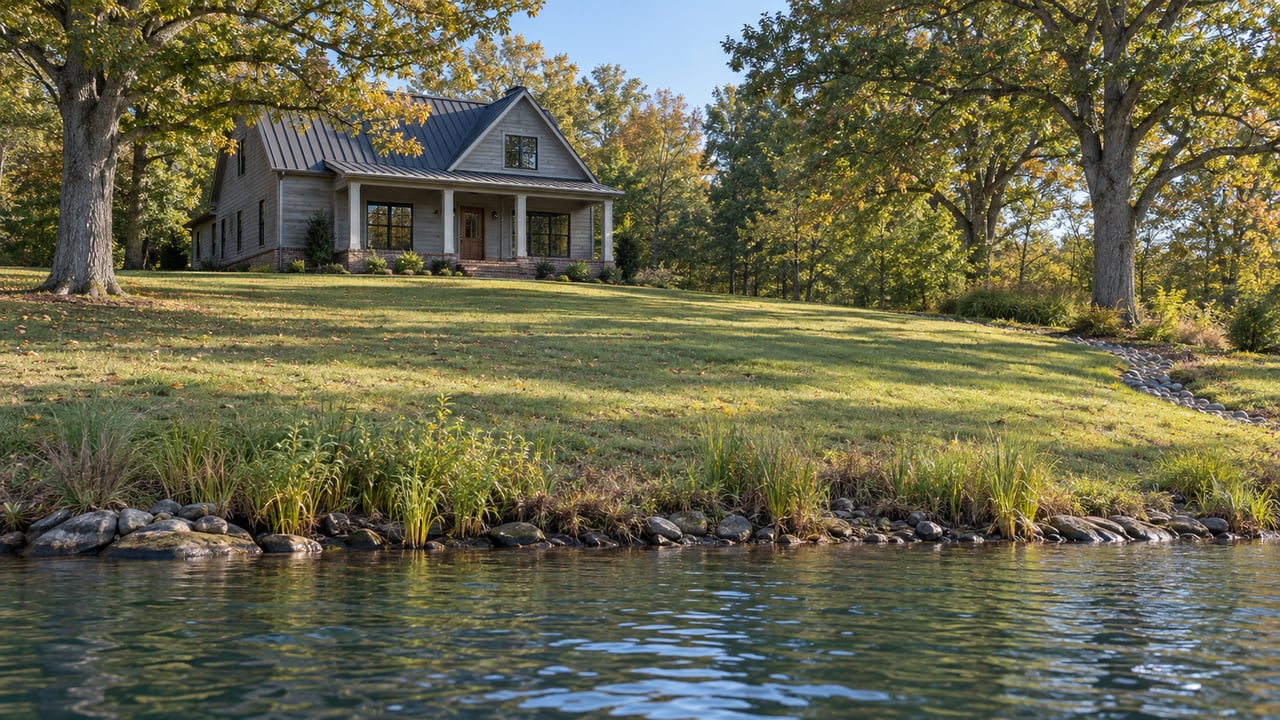
Taken together, the shoreline footage and the view tell you only part of what a lot can hold. The rest depends on whether there's enough suitable soil, far enough from the water, for a primary field and a replacement field.
The one development that answered differently
Vista Lago is a planned development by Maverick Construction LLC on Highway 143 in Bremen, where Simpson Creek meets Ryan Creek. The developer describes 96 wooded acres, 3,900 feet of shoreline, 12 custom homesites and 95 semi-custom lots, with homes of 2,500 to 4,500 square feet. Its investor materials target prices between $750,000 and $1 million.
Vista Lago didn't plan on lot-by-lot septic. Its application proposed one treatment plant for the whole community, designed for 60,000 gallons per day and an estimated 300 people. According to the Cullman Tribune's review of the permit file, the application described this as a way to "reduce environmental impact" compared with individual septic systems. The Alabama Department of Environmental Management issued permit AL0084516 on May 27. It took effect June 1, expires May 31, 2031, and authorizes treated domestic wastewater to be discharged into Ryan Creek on Smith Lake through an outfall listed 100 feet from shore.
The Cullman Tribune reported that in its response to public comments, ADEM wrote, "Yes, this would be the first NPDES permit to directly discharge to Lewis Smith Lake." The same article lists the four permitted wastewater facilities already in the lake's drainage area, and none of them discharges directly into the lake:
| Facility in the Smith Lake drainage area | Discharges directly into Smith Lake? |
|---|---|
| Cold Springs School WWTP | No |
| Good Hope WWTP | No |
| Double Springs WWTP | No |
| Addison Lagoon and Sprayfield | No, uses land application |
| Vista Lago, as permitted in May 2026 | Yes, the first such permit |
When the public was asked to comment, ADEM was urged to require a nondischarge design like the systems used elsewhere around the lake. ADEM answered that it doesn't have the authority to require a particular treatment design. That leaves the choice of wastewater system with the developer and the lot. The table shows how unusual a direct discharge is around this lake.
Who runs the plant after the last lot sells
For a buyer, the most useful question raised in the Tribune's coverage is about the long term, not the permit. ADEM's records list Maverick Construction and managing member Nathan Stoops as the responsible parties, and Maverick is named as both owner and operator. Under the permit, any change in ownership or control requires notice to ADEM and a modification or reissue, so it can't simply be handed to someone else.
The documents the Tribune reviewed don't name any entity that will take over ownership and financial responsibility for the system once the development is fully built. Running the plant is ongoing work. It involves sampling, lab testing, maintenance, repairs and compliance for as long as homes are connected.
A household with its own septic system knows who maintains the tank. In a community served by a shared plant, the cost of keeping that plant running is a recurring obligation, and it has to land somewhere. When the paperwork doesn't say where, the person buying a lot can't know how much of that cost they're signing up for.
Four months from permit to a different plan
The public response moved quickly. ADEM's public notice went out April 15 with a 30-day comment window. In August, the Cullman Times reported that State Rep. Cindy Myrex planned to bring residents and the developers together, while saying she had no authority over ADEM's permit process. The same report quoted Black Warrior Riverkeeper calling the plan "bad practice." On August 17, Stoops announced that the team would explore other discharge options. He said "sometimes being a good partner means going a step further to address community concerns," according to the Cullman Tribune. The Smith Lake Environmental Preservation Committee opposed direct discharge of any wastewater, treated or untreated, and asked for a public meeting.
On October 5, Maverick filed to modify the permit. The new plan keeps the same treatment plant and its 60,000-gallon-per-day design but sends the treated water into about four acres of underground drip fields instead of the lake. The drip fields would sit in open space west of the main entrance. "Every gallon still goes through the same treatment plant first," Stoops told the Cullman Tribune. "The only thing that changes is where the treated water goes once it leaves the plant." When the Tribune reported the filing in October, ADEM's public listing showed no approval of the change.
Drip fields put the treated water into the ground, which is closer to how the rest of the lake handles wastewater. Land became the deciding factor. The original application had listed land as unavailable for land application, and the new filing found four acres. On a Smith Lake lot of any size, room for ground disposal is what sets the limits.
What the paperwork can show on an existing lake home
The same rules apply when the lot already has a house and a working system. ADPH says owners or their agents, including real estate agents, can ask the local health department for the system's records. A completed permit or approval includes an installation diagram. These are the pieces the state rules set out:
- The permit file and diagram. Requested from the county health department, these show where the tank and field were approved to go.
- An optional evaluation. Under Rule 420-3-1-.33, the responsible person or a lender for the buyer or seller can ask the health department to evaluate the existing system. The rule doesn't require an evaluation for a sale, and the evaluation doesn't guarantee how the system will work later.
- Proof of pumping. Before an evaluation, the tank must have been pumped within the previous three years by a pumper licensed by the Alabama Onsite Wastewater Board. The health department can decline to evaluate certain systems installed without a permit on or after March 18, 1982.
- Repair permits. Under Rule 420-3-1-.32, repairs generally need a permit from the health department, though routine maintenance doesn't. A relocated system goes through the same steps as a new one.
The shoreline adds another layer. According to Smith Lake NOW's summary of Alabama Power's guidelines, revised July 15, 2025, Alabama Power owns land in fee up to the 510-foot contour and holds a flood easement up to 522 feet. A house inside that easement requires a separate elevated-structure permit, and one of its conditions is a certification from the local health department approving the sanitation system.
This is general information, not legal or financial advice. Before you rely on any of it for a specific property, confirm the details with the Cullman County Health Department, a licensed professional, or your attorney.
Quick answers
What does ADPH say to check before buying a lot? ADPH says to check whether municipal sewer is available first. Where it isn't, soil testing determines whether the lot is suitable for a septic system.
Does Vista Lago's permit allow raw sewage into the lake? No. As the Tribune reported, the permit covers treated domestic wastewater only, with limits on E. coli, oxygen demand, ammonia and chlorine.
How long is a septic Permit to Install good for? Five years from the date it's issued, under Rule 420-3-1-.13.
If you're weighing a lake lot or a lake home around Crane Hill and want help pulling the septic file, lining up soil testing on your timeline, or reading a development's wastewater plan before you sign, Sherry Pruitt Real Estate can go through it with you one document at a time. Schedule a consultation today.